☀️💍 Why Can’t I Bet on the Weather for My Wedding Day? The Truth About Rain, Odds & Bookmakers 🌧️🎲
My name is Hans & I'm a blue belt in Jiu Jitsu, train weight lifting since a few years whenever I get too fat and recently started to work as a Business Consultant in the supplements industry where I fell in love with natural testosterone boosters, fat burners etc. Turkester.ONE is my little baby and hopefully will become its very own brand soon enough! Until then, I keep reviewing third party products.
The Fantasy of Beating the Clouds
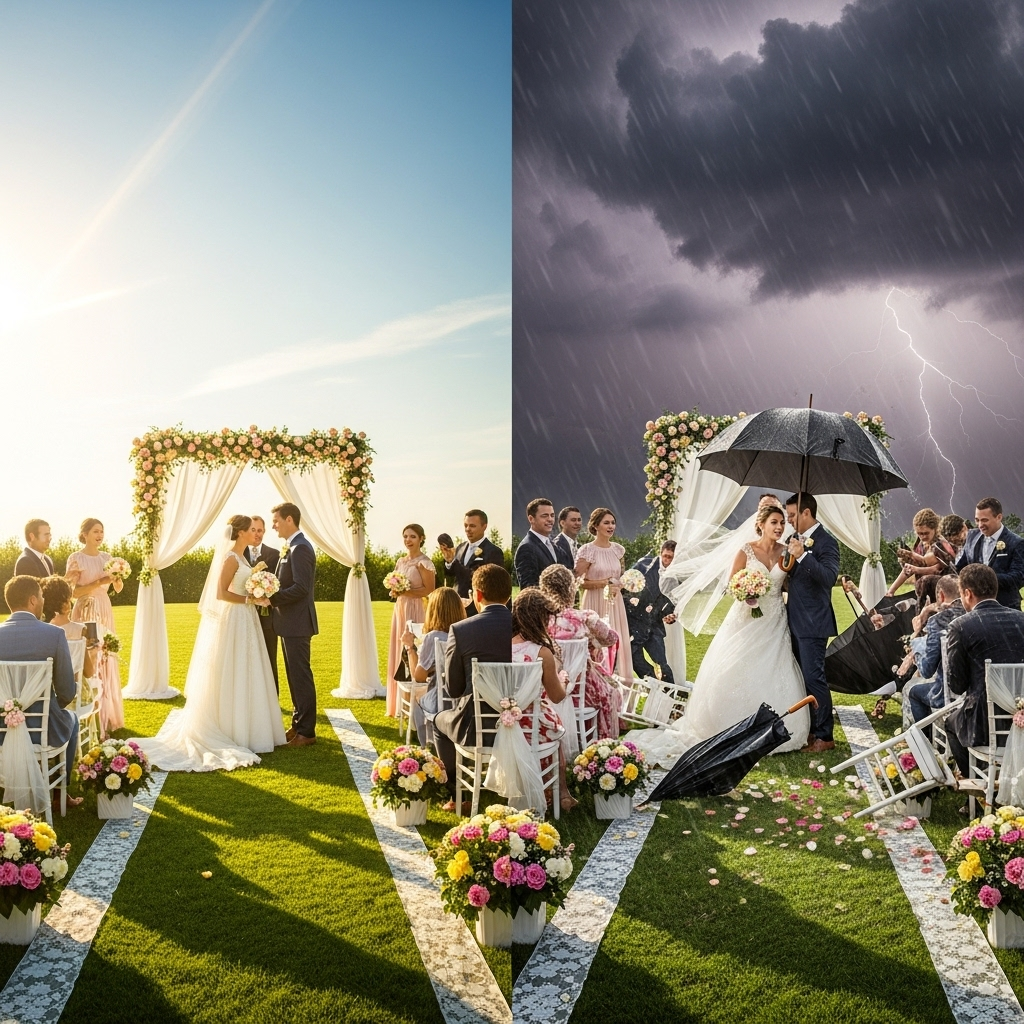
Imagine it: You’ve spent a small fortune on the perfect wedding venue, the flowers are arranged, the relatives have flown in, and your only prayer is sunshine at 3PM sharp. Then a mischievous thought creeps in: “What if I could hedge my bets? What if I could put €100 on ‘no rain,’ and if it pours, at least I get my money back?”
Seems reasonable, right? After all, people bet on everything — from who wins Eurovision to how many yellow cards appear in a football match. So why not the weather on your wedding?
The reality: bookmakers want nothing to do with your marital meteorology. And the reasons why are fascinating, tangled in economics, law, ethics, and probability theory.
Betting on Weather: A Strange History
Believe it or not, people have tried to bet on the weather before. In the early 2000s, British bookmakers briefly offered “novelty bets” on white Christmases — essentially: “Will it snow in London on December 25?” The media loved it. Punters loved it. But the markets quickly became chaotic and unprofitable.
Why? Because weather is not a “sporting contest.” There’s no fair play, no competitors, no referee. It’s just nature doing its chaotic dance, with probabilities driven by physics rather than competition.
And unlike football, where millions bet and balance the odds, weather markets were tiny, insider-heavy, and impossible to price accurately.
Insurance vs. Betting: The Big Divide
Here’s the kicker: betting on your wedding weather already exists — just not as betting. It’s called wedding insurance.
Insurance is, in essence, socially-acceptable gambling against misfortune. You pay a premium; the company pays you if disaster strikes. Want protection against rain ruining your wedding photos? Buy a policy.
The difference is legal and psychological:
Insurance is framed as protection.
Betting is framed as exploitation.
Governments regulate insurance tightly; they regulate gambling differently. The overlap (sometimes called “parametric insurance”) is a gray area where betting and risk management blur.
If you want to bet €100 that your wedding will be sunny, insurance companies will sell you that — as long as you call it a rain policy.
Why Bookmakers Won’t Touch Weddings
There are several reasons bookmakers avoid this market like a soggy cake:
Verification Problems
Sports results are public and verifiable.
Your wedding is private. What counts as “rain”? A drizzle? A 5-minute shower? Who decides?
Insider Knowledge
- Weather forecasts exist. A week before the wedding, meteorologists already have 70–80% accuracy. If punters can bet late, they’d win too often.
Moral Hazard
- With life insurance, you can’t bet on someone else’s death for obvious reasons. Similarly, if bookies allowed personal weather bets, you’d get shady actors “fixing the outcome” by moving locations or staging the event.
Tiny Market Size
- Bookmakers want massive, liquid markets (sports, elections). Your cousin’s wedding is too niche.
Legal Risk
- Regulators hate private-event bets. It looks too much like fraud waiting to happen.
The Philosophy of “Bettable Events”
This raises a deeper question: What counts as bettable?
The essence of a bet is:
Clear outcome
Agreed-upon timeframe
Independent resolution
A wedding-day weather bet fails all three. The outcome is ambiguous (“sunny enough”), the timeframe is arbitrary, and resolution requires private witnesses.
In other words: the universe doesn’t care about your confetti.
The Economics of Rain
Fun fact: Rain costs societies billions. Agriculture, tourism, logistics — everything gets disrupted. There are billion-dollar financial products that hedge against rainfall. Farmers literally buy futures contracts that pay out if drought or flood occurs.
So, in a sense, people already do bet on the weather. It just happens at the level of multinational corporations, not brides and grooms.
Your €100 wager on “no rain at 3PM” is a miniature version of global weather derivatives traded on Wall Street. The reason you can’t do it casually at a bookie is simply scale and verification.
Cultural Oddities: Weddings and Weather Superstition
Across cultures, weather at weddings carries symbolic weight:
Rain is considered good luck in Hindu tradition.
In Italy, “Sposa bagnata, sposa fortunata” — “Wet bride, lucky bride.”
In Western superstition, rain is mostly viewed as tragic comedy.
If bookies took bets on wedding weather, they’d essentially be monetizing superstition. It would spark outrage — “profiting off love” — and that’s bad PR even for bookmakers, who already take bets on reality TV scandals.
What If It Were Allowed?
Let’s play with the thought experiment. Suppose bookies decided tomorrow to open markets for “Wedding Weather Bets.”
Odds-making: They’d use meteorological models + seasonal averages.
Betting slips: “Location: Berlin. Date: June 12. Outcome: No measurable rain between 12–6PM.”
Verification: They’d tie it to official weather station data.
This would actually work. But then… people would game the system by carefully choosing locations with reliable forecasts, buying bets last-minute, or even staging “fake weddings.”
It’d collapse under fraud.
Comparison: Things You Can Bet On That Are Just as Weird
Eurovision song contest winners.
Reality TV eliminations.
Whether a politician says a certain phrase in a speech.
These are arguably just as arbitrary, but they pass the public verification test. The moment you move to private, unverifiable outcomes, the gambling industry slams the door.
The Meta-Reason: Gambling is About Spectacle
At its heart, gambling thrives on shared drama. Everyone watches the Super Bowl. Everyone knows the Oscars.
Your wedding? Only you, your family, and your photographer care. Betting markets require shared spectacle to function — otherwise they’re just private dares.
Why You’ll Never Hedge Against Rain at the Bookies
You can hedge against wedding weather — but not with a bookmaker. You’ll need insurance, a backup tent, and perhaps a sense of humor.
The deeper truth: betting markets are less about “risk” than about shared stories. Sports, politics, entertainment — these are collective narratives. Weddings are private narratives. That’s why bookmakers steer clear.
So when your big day comes, remember: the house won’t take your bet. But at least you’ll have a good story, rain or shine.
❓ FAQ
Q1: Can I buy insurance against rain on my wedding day?
Yes — many companies sell “weather insurance” policies that pay out if rainfall exceeds a certain threshold.
Q2: Have bookmakers ever offered weather bets?
Yes, famously “White Christmas” bets in the UK. But these are tied to public weather stations, not private events.
Q3: Why can’t I bet on personal events?
Because personal events are unverifiable, prone to insider knowledge, and too small to create liquid betting markets.
Q4: Could AI-powered prediction markets change this?
Potentially. Blockchain-based “decentralized oracles” could verify weather data. But mainstream bookies would still avoid private weddings for legal reasons.
Q5: So is weather betting illegal?
Not entirely. Large-scale weather derivatives exist on Wall Street. But consumer-facing bookmakers avoid it due to complexity and regulation.


