💀🎲 Why Can’t I Bet on When I’ll Die? The Dark Truth About Death, Gambling & Moral Hazard ⚰️
My name is Hans & I'm a blue belt in Jiu Jitsu, train weight lifting since a few years whenever I get too fat and recently started to work as a Business Consultant in the supplements industry where I fell in love with natural testosterone boosters, fat burners etc. Turkester.ONE is my little baby and hopefully will become its very own brand soon enough! Until then, I keep reviewing third party products.
The Ultimate Wager
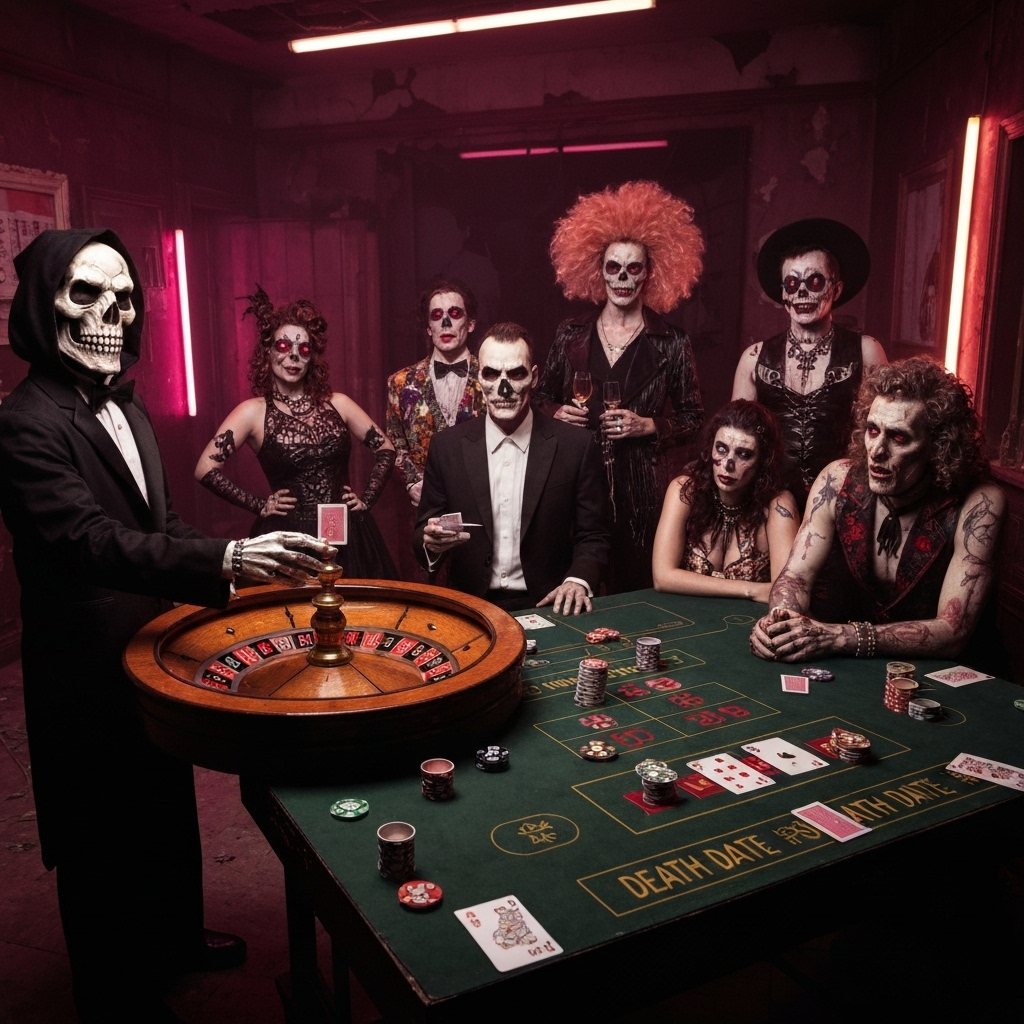
Death is the one certainty in life. Unlike sports, elections, or weather, this event is guaranteed to happen. That makes it, in theory, the perfect bet. Everyone has an eventual outcome, everyone has odds based on health and lifestyle, and everyone is curious.
So why can’t you walk into a bookmaker’s office and place €50 on “I’ll die before age 75”? Or bet on your coworker’s heart attack?
The answer: because death betting is where gambling, ethics, and law collide in the ugliest way possible.
The Temptation of Death Markets
It’s not as absurd as it sounds. Bookmakers already run “celebrity death pools” unofficially — often among friends or in dark corners of the internet. People pick which famous person will die next, and the winner “collects” when the grim reaper strikes.
In theory, bookmakers could scale this up:
Public figures with known health problems.
Actuarial tables giving odds for “average lifespan.”
Bets tied to age, illness, or accidents.
But every attempt collapses under ethical, legal, and practical problems.
Problem 1: Moral Hazard (a Fancy Word for “Murder for Profit”)
The biggest issue is what economists call moral hazard — when betting creates perverse incentives.
If you allow bets on personal death dates:
People might kill for payouts.
Families could “hedge” against a sick relative.
Criminals could profit by betting on targets.
It’s essentially legalizing assassination markets. No regulator would ever allow that.
Problem 2: Insurance Already Exists
Life insurance is, in a sense, a legal version of “death betting.” You pay premiums; your beneficiaries get paid when you die. The difference is framing:
Insurance is protection for families.
Betting is profit from tragedy.
Societies tolerate the former. The latter feels grotesque.
Problem 3: Privacy and Exploitation
Imagine open markets on the odds of you dying. Suddenly, your private medical data becomes gambling fuel. Bookmakers might trade on cancer diagnoses, heart conditions, or family histories. This would turn human vulnerability into entertainment.
It would also invite lawsuits — nobody wants to see their name on a betting slip in a casino.
Problem 4: Verification & Resolution
For public figures, death is reported clearly. For private individuals, it’s messier. How would bookmakers confirm your death date? Who supplies the evidence? Fraud would explode: fake deaths, misreported accidents, manipulated certificates.
The Philosophy: Gambling on Certainty vs. Chance
Traditional gambling thrives on uncertainty — who will win, what number will roll, what outcome will happen. Death is certain, only timing is uncertain. That makes it less of a “game” and more of a cold statistical calculation.
The poetry of gambling is lost when the house is literally betting against your heartbeat.
Dark History: The Shadow of “Death Pools”
In the early 20th century, informal “death pools” emerged in pubs and workplaces. Groups wagered on which celebrity, monarch, or politician would die first. These were underground, often seen as tasteless but tolerated as private jokes.
Today, online forums run versions of this. They’re legally murky but rarely prosecuted because they involve no official bookmaker and small stakes. But any professional expansion would cause public outrage.
Insurance vs. Gambling: Where Lines Blur
Here’s the kicker: insurance companies already gamble on your death every day. Actuaries (the number-crunchers of mortality) set premiums by calculating your odds of dying in a given year. Smokers pay more, marathon runners pay less.
So what’s the difference between an insurance policy and a death bet?
Insurance has a social purpose: protecting loved ones.
Gambling has no social purpose: it’s profit and spectacle.
The ethical framing makes one acceptable, the other forbidden.
Could Crypto Enable Death Markets?
On the fringes of the internet, some libertarian circles fantasize about blockchain “assassination markets.” In theory: anonymous bets on death dates, with payouts if a target dies.
This concept horrifies regulators. It’s essentially a murder-for-hire disguised as gambling. If such markets exist, they operate in the darkest corners of the dark web.
Thought Experiment: If It Were Allowed
Let’s imagine a regulated “Death Exchange.”
You enter your personal data.
Odds are generated via actuarial models.
You bet on your own lifespan.
Would people participate? Maybe — some would see it as morbid humor, others as financial strategy.
Would it last? No. Because the first murder scandal would destroy the system overnight.
Why Society Rejects It
Ultimately, societies draw moral lines. Betting is tolerated when it’s entertainment. Betting on your own death feels like stripping dignity from human existence. It transforms mortality — the most profound human reality — into cheap spectacle.
In other words: it violates not just law, but cultural taboos.
The Bet You’ll Never Make
You can gamble on football, politics, even the weather. But you’ll never gamble legally on your own death. Not because it’s impossible, but because it’s too dangerous, too exploitable, and too offensive to our shared sense of dignity.
Instead, we live with the ultimate gamble every day — life itself. The odds are stacked against us all, but at least you don’t need a bookmaker to remind you.
❓ FAQ
Q1: Is death betting illegal?
Yes — directly betting on private individuals’ deaths would violate gambling and homicide laws.
Q2: Isn’t life insurance the same thing?
Similar in mechanism, but framed as protection, not profit. Insurance is heavily regulated to prevent abuse.
Q3: Do celebrity death pools exist?
Yes, informally among friends or online communities, but not through licensed bookmakers.
Q4: Could blockchain create death markets?
In theory, yes, but they would function as assassination markets — making them criminal enterprises.
Q5: Why does society tolerate some morbid bets (like royal baby names) but not death?
Because baby names are harmless speculation; death touches the core of human dignity and invites exploitation.


